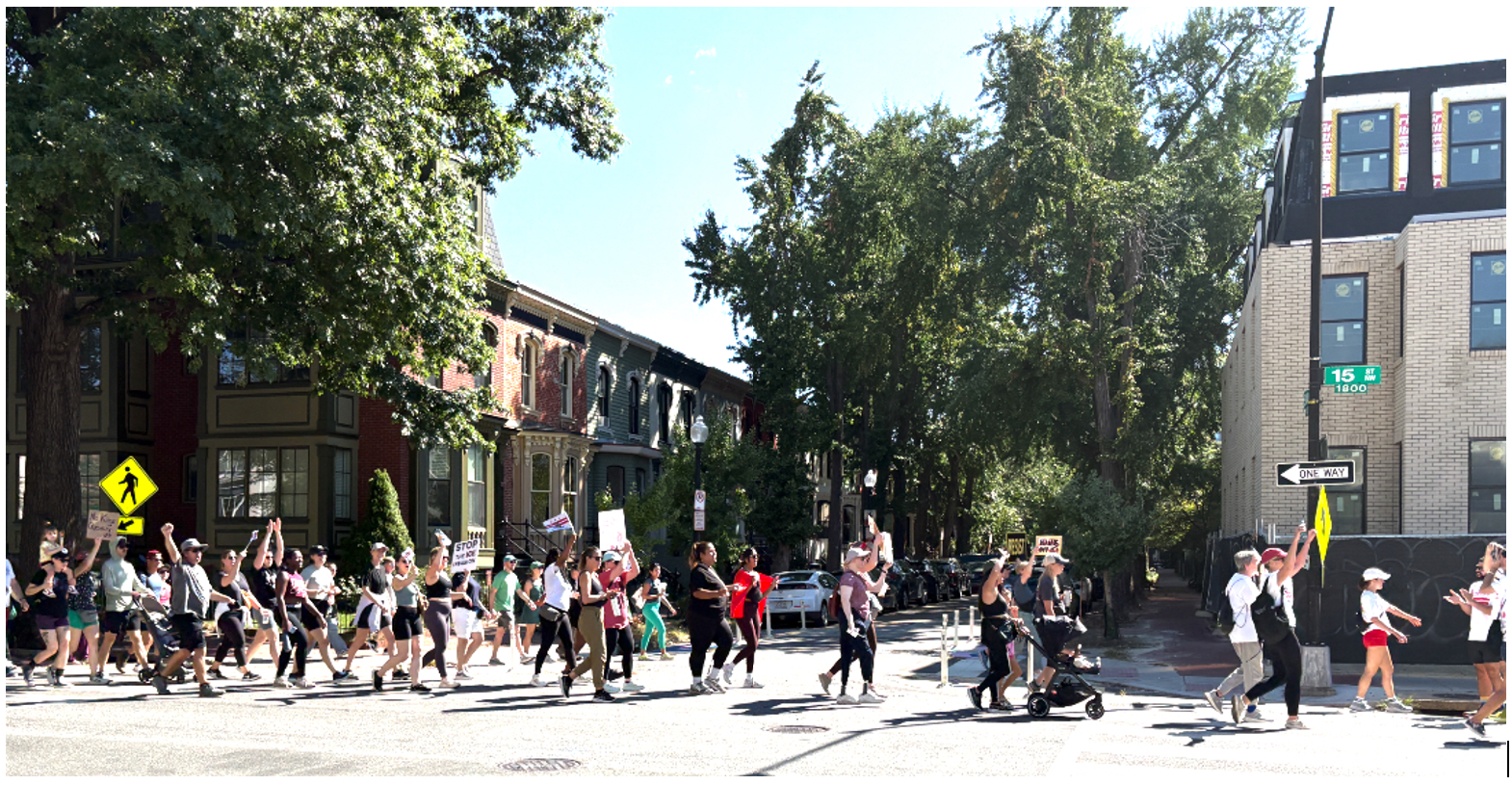
“Free DC” Protesters March down 15th Street Past Swann Street on September 1, 2025. Photo by the author
Let’s take a trip up Washington DC’s 14th street NW. We’ll begin at the Jefferson Memorial and head north, through the National Mall, across Constitution Avenue, then Pennsylvania Avenue, past the White House campus and through downtown with its alphabetized cross-streets: F, G, H, K, and L. As we head around Thomas Circle, past N, P, Q, and R streets, office buildings give way to shops, restaurants, bodegas, and apartments.
Between S and T street, there’s a cross street that breaks the pattern: Let’s pause here by the Ted’s Bulletin restaurant and walk down Swann Street’s brick sidewalk lined with ginkgo trees, parallel parked cars and rowhouses too small to be built anymore.
Swann Street’s charm can compete with historic neighborhood side streets anywhere. But not every day, or night, on Swann Street has been pleasant.
When Edward Coristine—a 19-year-old member of Elon Musk's Department of Government Efficiency—was beaten and bloodied by two teenagers on Swann Street in August, 2025, the assault became a pretext for President Trump’s ongoing war on urban crime, DC home rule, and immigration. In fact, Swann Street and the surrounding neighborhood have witnessed more than a century of violence and resistance, espionage and counterintelligence, state power and defiance, arrivals and forced departures. The area has become a stage where questions of force, authority, and belonging have played out across generations. What happened to Coristine and what happened to the people who came before and after him reveals who gets protection, who faces punishment, and who decides which forms of violence are legitimate and which victims deserve our sympathy.
The Queen of Drag
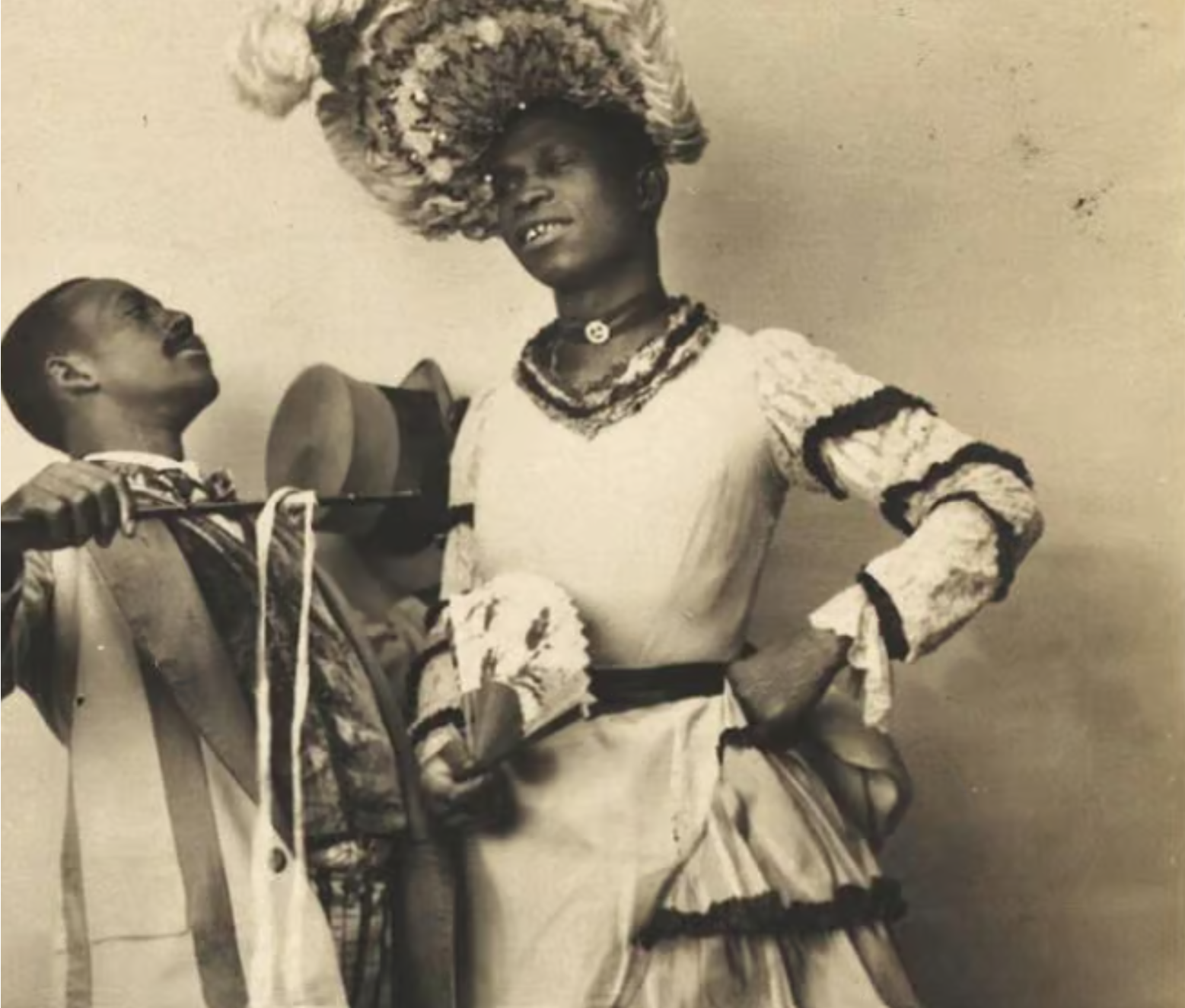
Image from “The First Drag Queen was a Former Slave” by Channing Gerald Joseph/The Nation
Swann Street was first named after Thomas Swann, a 19th Century aristocrat, Congressman, Governor of Maryland, and enslaver. In 2022, the Dupont Circle Advisory Neighborhood Commission (ANC) voted to rename the street after William Dorsey Swann. This Mr. Swann was born into slavery in 1858 in Washington County, Maryland. He moved to Washington DC in 1880, worked as a janitor, joined the secret, Black cross-dressing community, hosted secret drag balls in locations such as the corner of 15th and L Streets and at 12th and F streets, a few blocks from the White House. He was reportedly also the first person to call himself the “Queen of Drag”.
Swann’s soirees did not escape police response, and his gatherings were disrupted multiple times. On April 13, 1888, the Washington Post ran the headline: “Negro Dive Raided. Thirteen Black Men Dressed as Women Surprised at Supper and Arrested.” According to an account published by Channing Gerald Joseph in The Nation, “more than a dozen escaped as the officers barged in and Swann tried to stop them, boldly telling the police lieutenant in charge, ‘You is no gentleman.’ In the ensuing brawl, the Queen’s ‘gorgeous dress of cream-colored satin” was torn to shreds. Joseph claims the fight is one of the first know instances of violent resistance in the name of LGBTQ rights.
Punk DC
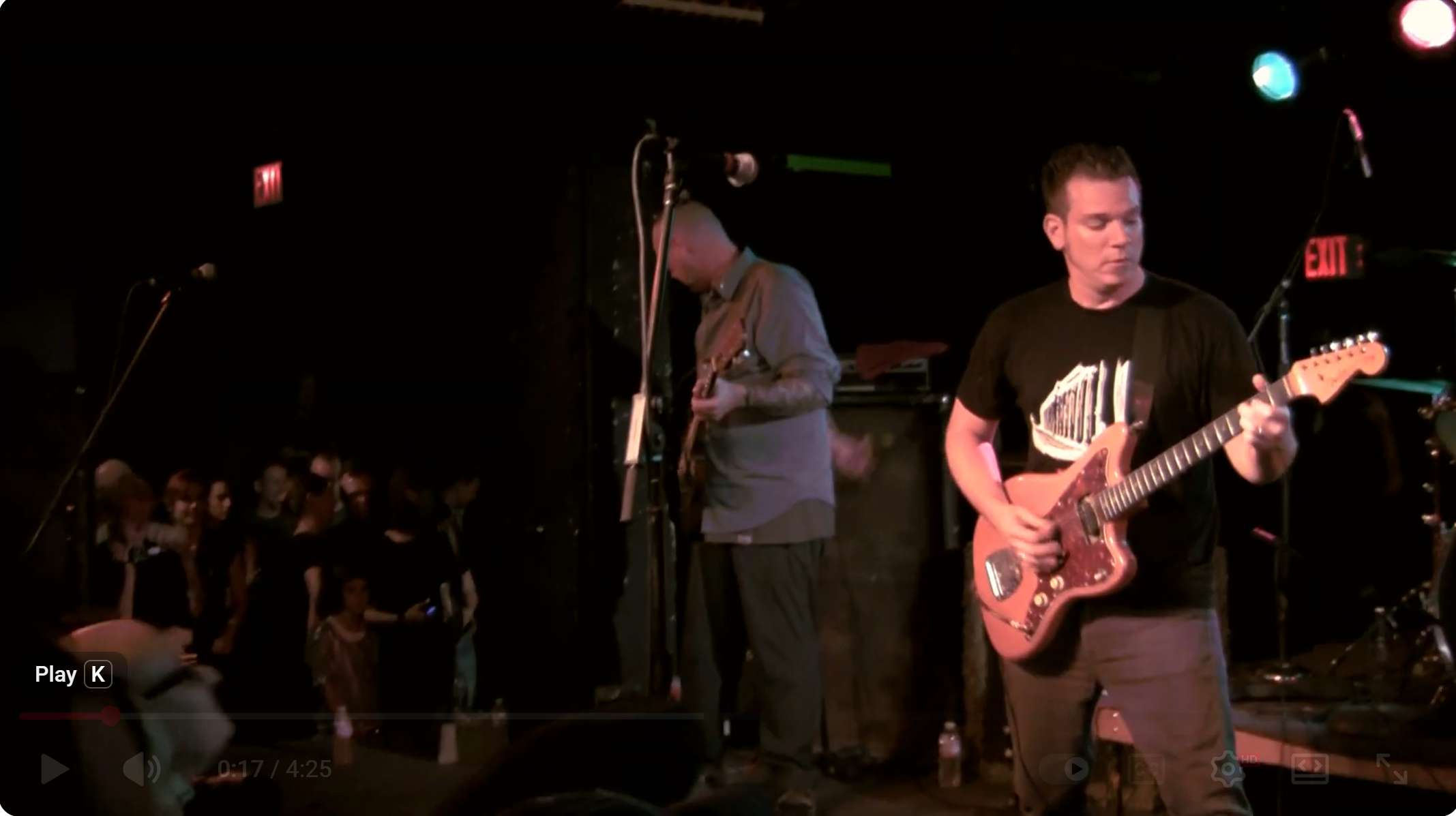
Gray Matter Performs “Swann Street” at the Black Cat. https://www.youtube.com/watch?v=G7DgNdX6Qnw
One hundred years after Swann’s arrest, a new generation of activists carved out enclaves and played music in the same neighborhoods that once hosted clandestine drag balls. Members of the DC hardcore scene were mostly white and not necessarily queer, but Swann might have identified with the movement’s work to create countercultural spaces and push back against conservatism and cold-war authoritarianism at home and abroad. Not all of the movement’s most enduring songs were political, and some were inspired by the neighborhood. Take “Swann Street” composed by Geoff Turner, the frontman for DC bands Gray Matter and Three. Turner’s inspiration came as he was walking back to his apartment on Swann Street after being fired from his job at Graffiti Video. He later told the Washingtonian his walk home “was one of those kinds of voyages of self-doubt…I was trying to run back over where I had failed in building my new life in the city—contemplating that while looking at the sidewalk. When I got home, it became critical to my self-worth that I create a song to capture that feeling. The song popped out in about 15 minutes”.
Espionage and Execution
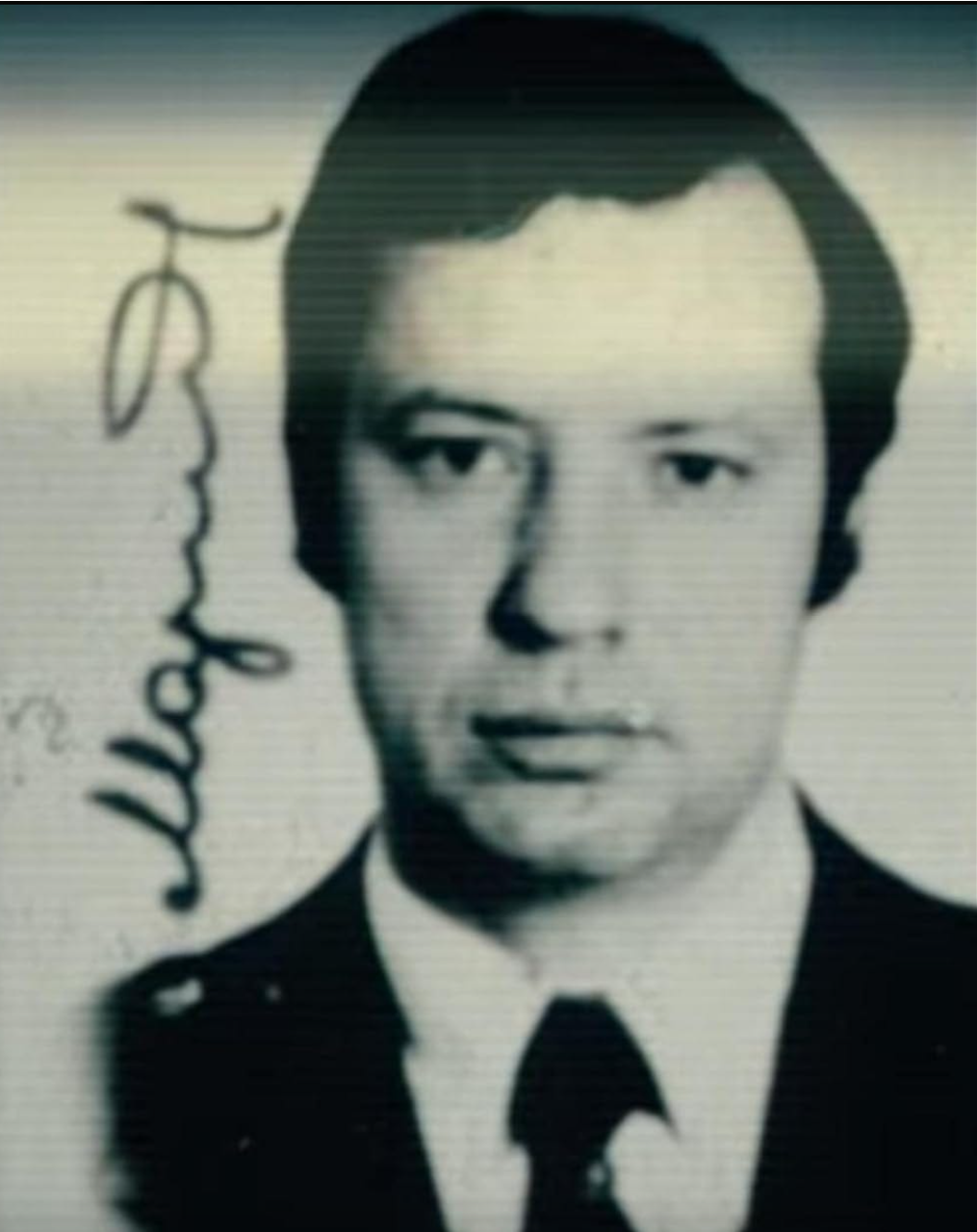
KGB Officer Valery Martynov. Image from Jacob Silverman/“Prominent DOGE Staffer Is Grandson of Turncoat KGB Spy”
I wonder if Turner, while on one of his contemplative walks along the streets of Dupont Circle, ever crossed paths with Edward Coristine’s maternal grandfather Valery Martynov who worked at the Soviet Embassy and ambassadors residence, a beaux arts building on 16th Street between L and M. It’s unlikely that they would have exchanged any more than a “good morning”, as I assume Martynov was a tight-lipped man. His embassy attaché job was a cover. According to reporting by Jacob Silverman, Martynov was a KGB spy.
The streets of DC in the 1980s were a backdrop to spy vs. spy. Silverman writes: “The spy war was in full swing, and the greater DC area was filled with undercover operatives and the counterintelligence officers hunting them. Both sides were trying to ferret out, recruit, or compromise the other’s officers, and sometimes they were devastatingly successful.” The FBI recruited Martynov as an American agent and he began providing Soviet secrets to his American handlers. Eventually, a Kremlin counterintelligence agent named Victor Cherkashin, who was stationed at the DC rezidentura and aided by U.S, moles Robert Hansen and Aldrich Aimes, found out that Martynov was spying for the United States.
The KGB found a way to send Martynov back to Russia without tipping him off that his cover was blown. He was dispatched as part of an honor guard escorting Vitaly Yurchenko, another KGB agent who had defected to the United States in 1985 and then re-defected back to Russia. Yurchenko was a hypochondriac who was convinced he had stomach cancer and sought medical help from the United States. He also wanted to be with his former lover, Valentina Yereskovskaya, the wife of a Soviet intelligence officer who at the time was posted to Montreal. But after Yereskovskaya rejected him during a Montreal visit, and he found out he was cancer free, Yurchenko developed buyer’s remorse. Silverman describes it this way:
“On November 2, 1985, two months after his disappointing trip to Canada, Yurchenko went to dinner in a Georgetown restaurant with a CIA handler. At one point, Yurchenko asked the agent what would happen if he tried to leave. "Will you shoot me?" The CIA officer said that that's not how his government treated defectors. Yurchenko rose from the table to go to the bathroom. "If I don't come back, it's not your fault," he said, puzzling the agent. And like that, the prized defector walked out and disappeared.”
Yurchenko reappeared at the Soviet embassy with a fantastic story claiming he had been kidnapped and drugged by the Americans before making a daring escape. Instead of immediately sending him back to Russia for execution, the KGB determined they would be better off saving face by accepting the lie. Yurchenko, fifty years old at the time, served out the remainder of his KGB career and retired in Russia, where he remains today. Coristine’s grandfather was not so fortunate. KGB agents arrested Martynov as soon as he got off the plane. He was put on trial and executed in 1987. In 1995, Martynova’s wife Natalya immigrated to the United States along with her two children. Her daughter Anna, Edward’s mother, became a financial professional who married Charles Coristine, a Wall Street executive who owns the organic snack food company, LesserEvil.
A Show of Force
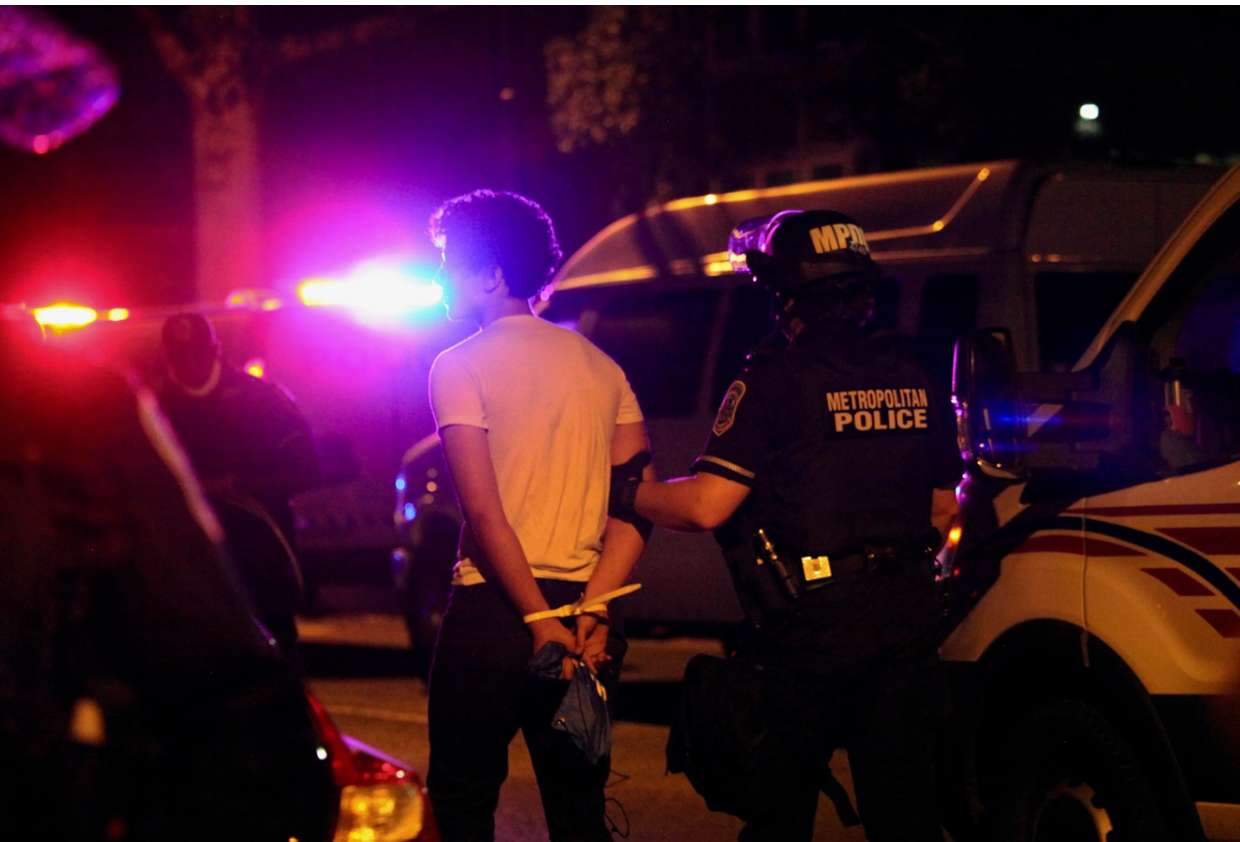
A Swann Street Protester is arrested by the police. Photo by Evy Mages/The Washingtonian Magazine
American intelligence operated in the shadows against Russian spies in the 1980s Cold War. Contrast that to the scene on Swann Street on June 1, 2020, when police made a public show of force against civilian protesters. A few hundred people who had been demonstrating near the White House against police brutality in the wake of George Floyd’s murder had walked uptown and found themselves corralled on Swann Street with police officers blocking off access on both sides. According to Jane Recker of the Washingtonian, “the group was overwhelmingly young—mostly college kids—and there were a number of minors present.” They were trapped on Swann between 14th and 15th with no way out. Around 9:45 pm, police moved in and pepper sprayed the protesters. Some Swann Street residents opened their doors and ushered demonstrators inside. Seventy people gained sanctuary in the house of one resident and stayed until morning. By the next day, police had arrested 194 people on Swann Street. Chief of Police Peter Newsham claimed that police began making arrests after reports of protestors kicking in doors and burglarizing homes. Multiple eyewitnesses disputed these allegations.
No Sanctuary
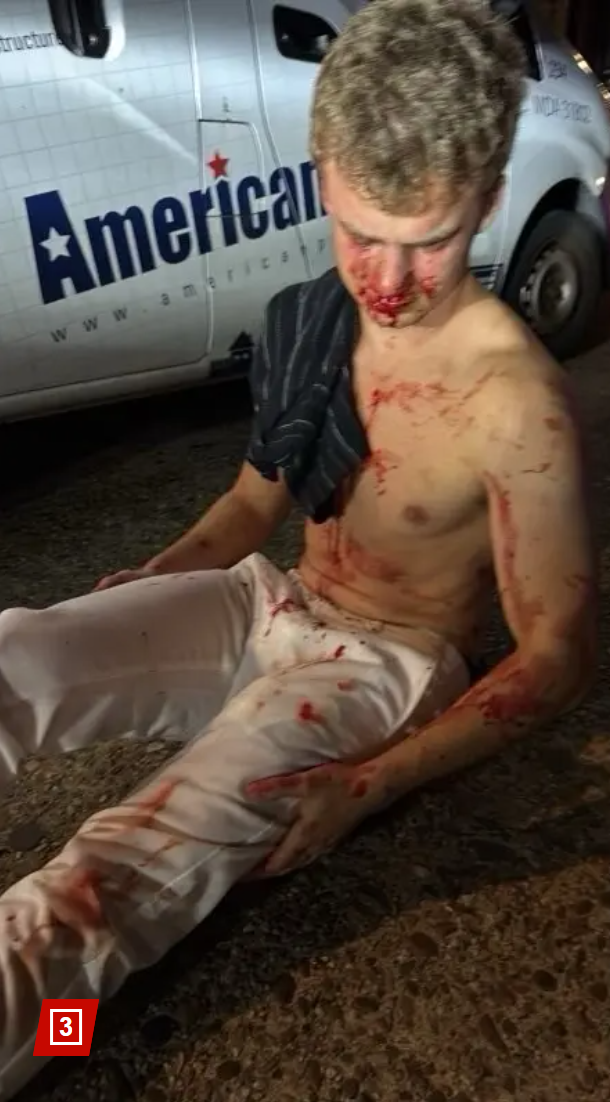
President Donald Trump shared this image of Edward Coristine on his Truth Social account. Coristine is reported to have suffered a bloody nose, black eye, and concussion as a result of his assault.
Police appeared on Swann Street again the morning of August 3, 2025, this time to intervene in Coristine’s assault. According to the MPD, “at approximately 3 AM the suspects approached the victims, who were standing next to their vehicle, in the 1400 block of Swann Street, Northwest. The suspects demanded the victim’s vehicle and then assaulted one of the victims. During the assault, an MPD cruiser pulled into the block causing the suspects to flee. Two of the suspects were apprehended by the on-scene officers. One of the victims was treated on scene by DC Fire and EMS for injuries sustained in the assault.”
Coristine, who grew up in Connecticut. was new to the city. A few months prior, he dropped out of Northeastern, where he was a freshman, and moved to DC answering Elon Musk’s call for “super-high-IQ small-government revolutionaries willing to work 80+ hours per week” for zero pay at the Department of Government Efficiency (DOGE). He gained media attention as one of the youngest members of a team demanding access to sensitive Federal databases and orchestrating mass firings and funding cuts.
Coristine was walking a friend to her car the night of the assault. This time, no neighbors opened their doors. No sanctuary was offered. Photos of Coristine’s bloodied face and torso circulated online soon after the attack. The suspects, a 15-year-old boy and a 15-year-old girl from Hyattsville, Maryland plead guilty to the crime as well as to a second assault at a nearby gas station on U Street. According to the Washington Post: “Video footage shows the boy, wearing red sneakers and a black ski mask over his head, hit two victims, according to prosecutors. Then he kicked the head of another person lying on the ground as others took the person’s shoes and watch.”
Both assailants were sentenced to probation.
What series of unfortunate events resulted in two teenagers, miles from home, assaulting and robbing strangers in the dead of night? A report published one month after Coristine’s assault by the DC Criminal Justice Coordinating Council, an independent research agency, identifies multiple root causes. These include economic instability and unmet needs, access to weapons, peer influence, lack of belonging, few strong adult mentors and role models, and online conflicts that escalate into the streets, among other factors.
The report also proposes remedies: expanding meaningful career pathways. providing wrap-around services for young parents, including childcare, mentoring, transportation assistance, and case management, funding more mental health counselors in high schools, strategies that identify the most at-risk youth and employ community-based violence interrupters, and better agency coordination.
It seems unlikely that the teenagers who assaulted Coristine will receive any supportive services, at least as far as the Federal response is concerned. For President Trump and his allies, the root causes of the assault and others like it are “soft on crime” liberals, an incompetent local government incapable of effectively fighting lawlessness, and an infiltration of illegal immigrants.
“The Enemy Within”
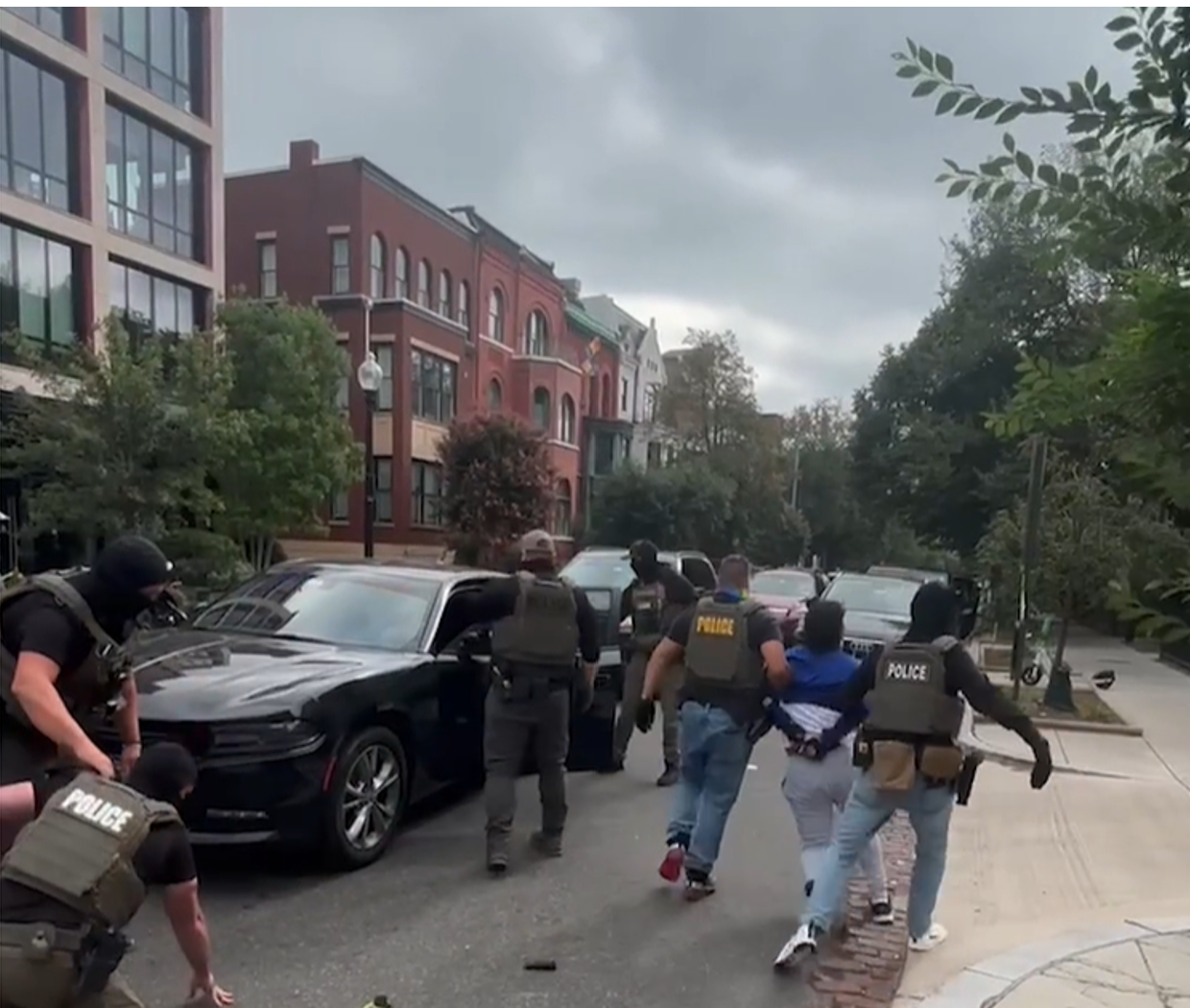
Federal agents detain Enrique Carias Torres. Image from video by Dan Rosenzweig-Ziff/The Washington Post.
Forty years after American law enforcement waged covert war with Soviet spies on the streets of DC, the United States is again targeting foreigners with methods that echo authoritarian playbooks. This time, “the enemy with” are undocumented immigrants. This time, American undercover agents--ICE officers in masks, without identification, and using unmarked vehicles--are hidden in plain sight. Among ICE’s targets: food delivery drivers on mopeds who work in an unregulated gig economy industry filled with immigrant workers and operate in public spaces where it is easier to make warrantless arrests.
One such target was Cristian Enrique Carias Torres, a Venezuelan native who entered the United Sates at the Texas-Mexico border in 2023. In the ensuing two years, he received tickets likely related to his work as a food delivery including charges of reckless driving, driving without a permit, and failure to display a decal. He also failed to appear at immigration hearings in November 2023 and in November 2024. At that point, an immigration judge issued a final order of removal.
On the morning of August 16, Carias Torres was picking up a coffee order from the Bluestone Lane coffee stop at 14th and R street, two blocks south of Swann Street. According to bystanders, two masked agents wearing tactical police vests were waiting outside the entrance for him. Carias Torres realized the agents were following him as he neared his moped. He put down the takeout order and started to run before being tackled to the ground by agents in an incident that was videoed by a Washington Post reporter. Bystanders circled the mele, shouting questions and accusations at the officers, but no one physically intervened. Ultimately, six agents detained the delivery driver, appeared to tase him with a stun gun, and removed him in an unmarked van. In the process of tackling Carias Torres, an officer fell to the ground and injured his head, leading the man who was tackled to be charged with assaulting his apprehender. Carias Torres was later sent to an ICE processing facility in Louisiana and deported to Venezuela. A Trump Administration official alleged that Carias Torres had gang affiliations but provided no supporting evidence.
Arrivals and Departures
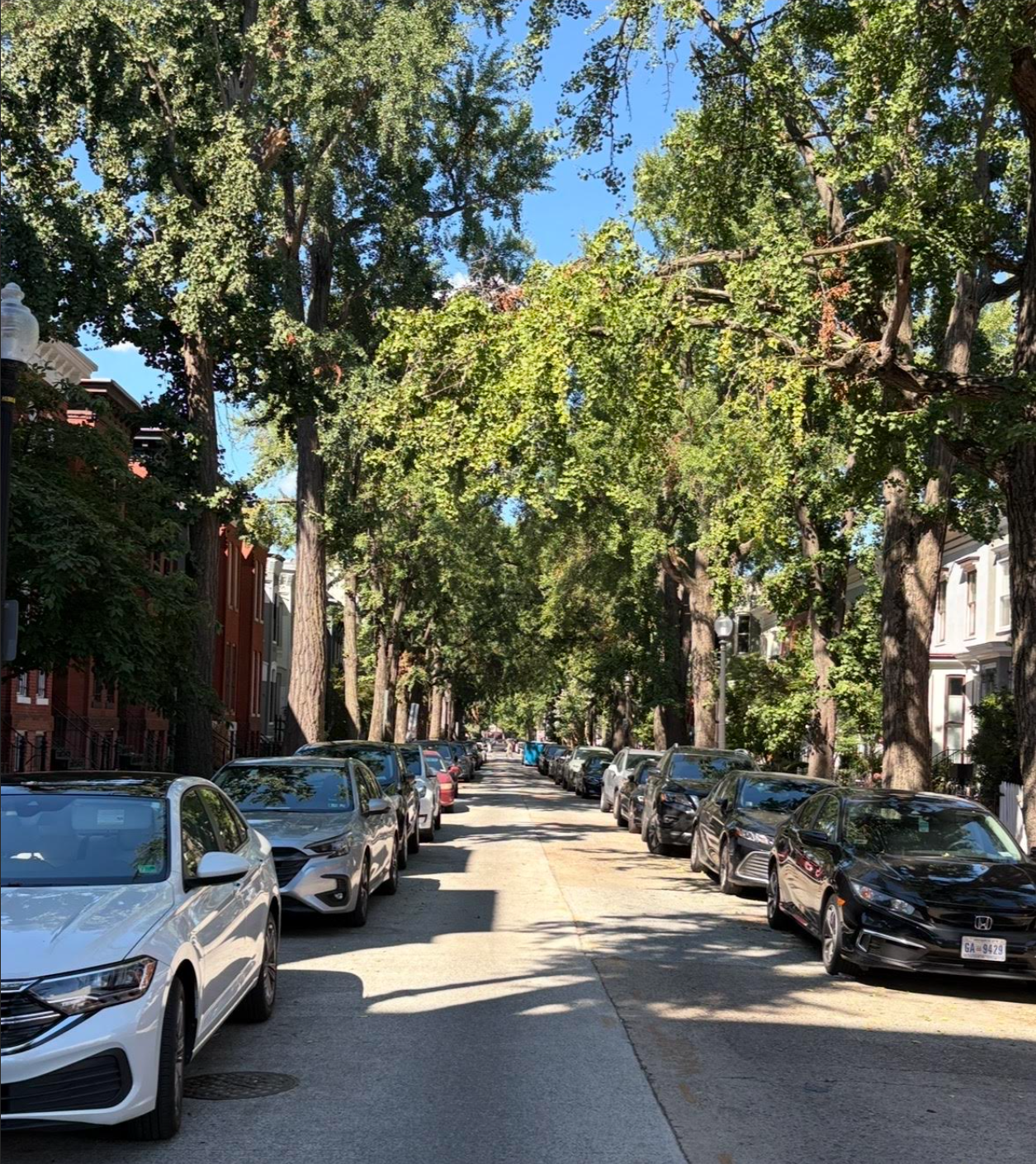
Swann Street and the surrounding area has always been a place of arrivals and departures. William Dorsey Swann arrived from slavery and left behind a legacy powerful enough to reclaim the street's name. Valery Martynov and Vitaly Yurchenko arrived from the Soviet Union, lead clandestine lives, and returned to their homeland, one to a fabricated hero’s welcome, the other to face trial and execution. Geoff Turner arrived in the 1980s seeking to build a new life in the city, got fired, walked home in self-doubt, and departed after creating a song that would outlast his residency. Black Lives Matter protesters arrived, were kettled and pepper-sprayed, found sanctuary in strangers' homes, and departed by morning—some free, some in handcuffs. Edward Coristine arrived answering Musk's call to dismantle government, was beaten at 3 AM, and departed bloodied. Two teenagers arrived from Hyattsville that same night, miles from home in the dark, assaulted strangers, and ended up in probation, both released to relatives to navigate whatever brought them here. Cristian Enrique Carias Torres arrived from Texas seeking work, spent two years delivering food on a moped, was tackled outside a coffee shop two blocks south, and departed in an unmarked van bound for deportation.
The cross streets remain. The rowhouses endure. The trees keep growing. But the human stories that unfold along the neighborhood’s orderly street grid are unpredictable. Why was one spy allowed to live while another was executed? Why were some protesters rescued while others arrested? Why was the legacy of a drag queen rediscovered and why does a punk classic endure while so many other lives and works have faded into history? Why do some crimes go un-mourned while others prompt calls for harsher punishment? The built environment promises order. Perhaps someday the distribution of power, protection, and belonging will follow a more logical pattern—one guided by justice rather than the vicissitudes of fate.
